Start With the Cultural Shift Already Underway
Women Artists Changing the Future of Contemporary Culture is for readers who want to understand why today’s creative landscape feels broader, sharper, and more emotionally honest than it did a generation ago. Women artists are not simply asking for space inside existing institutions. They are changing the questions culture asks, the materials it values, the communities it includes, and the stories that become visible. Their work is shaping how people talk about identity, power, care, technology, memory, and belonging in everyday life.
Women Artists Are Expanding What Culture Takes Seriously
Contemporary culture is shaped by what people are taught to notice. For a long time, subjects connected to women’s lives were often treated as intimate, decorative, minor, or secondary. Many women artists are changing that hierarchy by insisting that care work, grief, friendship, migration, motherhood, aging, beauty, anger, illness, and desire can all carry public meaning. The future they are building does not ask those themes to become less personal before they become important.
This matters because culture often changes first through attention. When an artist frames a kitchen table, a family photograph, a woven surface, or a remembered body as worthy of serious study, she changes the viewer’s scale of value. The familiar becomes complex. The private becomes historical. The overlooked becomes evidence.
That shift can be subtle, but it is powerful. A viewer may enter a gallery expecting to see mastery, novelty, or shock and leave thinking about whose daily labor has been hidden inside the word “ordinary.” Women artists are making contemporary culture more honest by refusing to separate beauty from responsibility or emotion from intellect.
New Materials Are Carrying New Authority
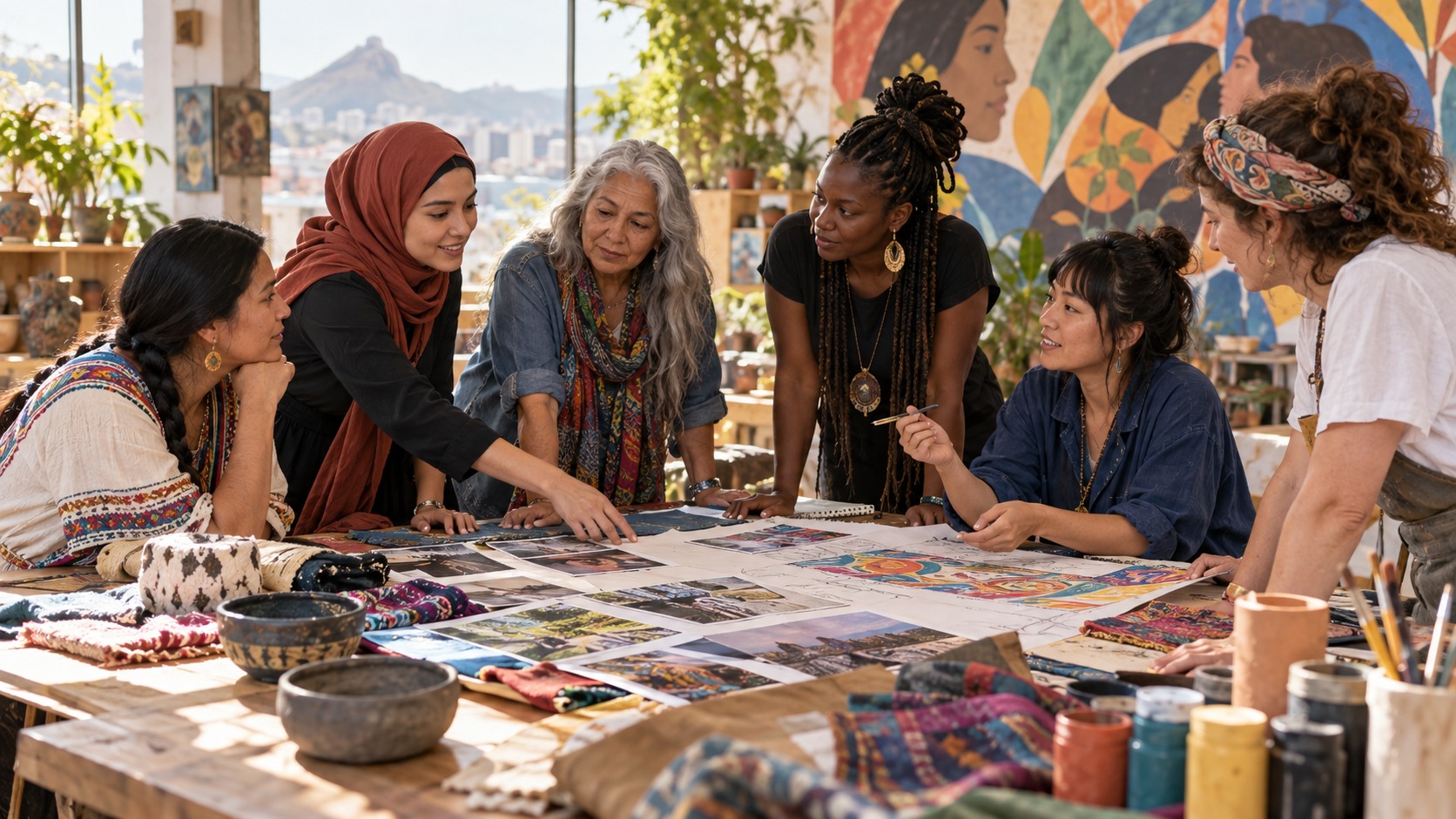
One of the most important changes in contemporary art is the authority given to materials once dismissed as craft, utility, or domestic skill. Fiber, clay, paper, recycled objects, cosmetics, hair, clothing, audio fragments, and family archives are being used with conceptual force. These materials are not chosen merely for texture. They bring histories of touch, repetition, repair, and survival into the center of the work.
Women artists have helped push this expansion because many inherited traditions were kept alive outside official art institutions. Quilting, weaving, mending, embroidery, food presentation, ritual objects, and home-based making carried knowledge even when critics failed to name it as art. In contemporary practice, those methods can become a way to challenge whose labor becomes visible and whose intelligence is recognized.
The result is not a rejection of painting, sculpture, or photography. It is a broader field of seriousness. A wall hanging can argue. A vessel can remember. A video can hold a family archive beside a public history. A performance can make the body a site of research. The future of culture becomes more layered when artists do not have to leave inherited forms behind to be considered modern.
Technology Is Becoming More Human in Women’s Creative Hands
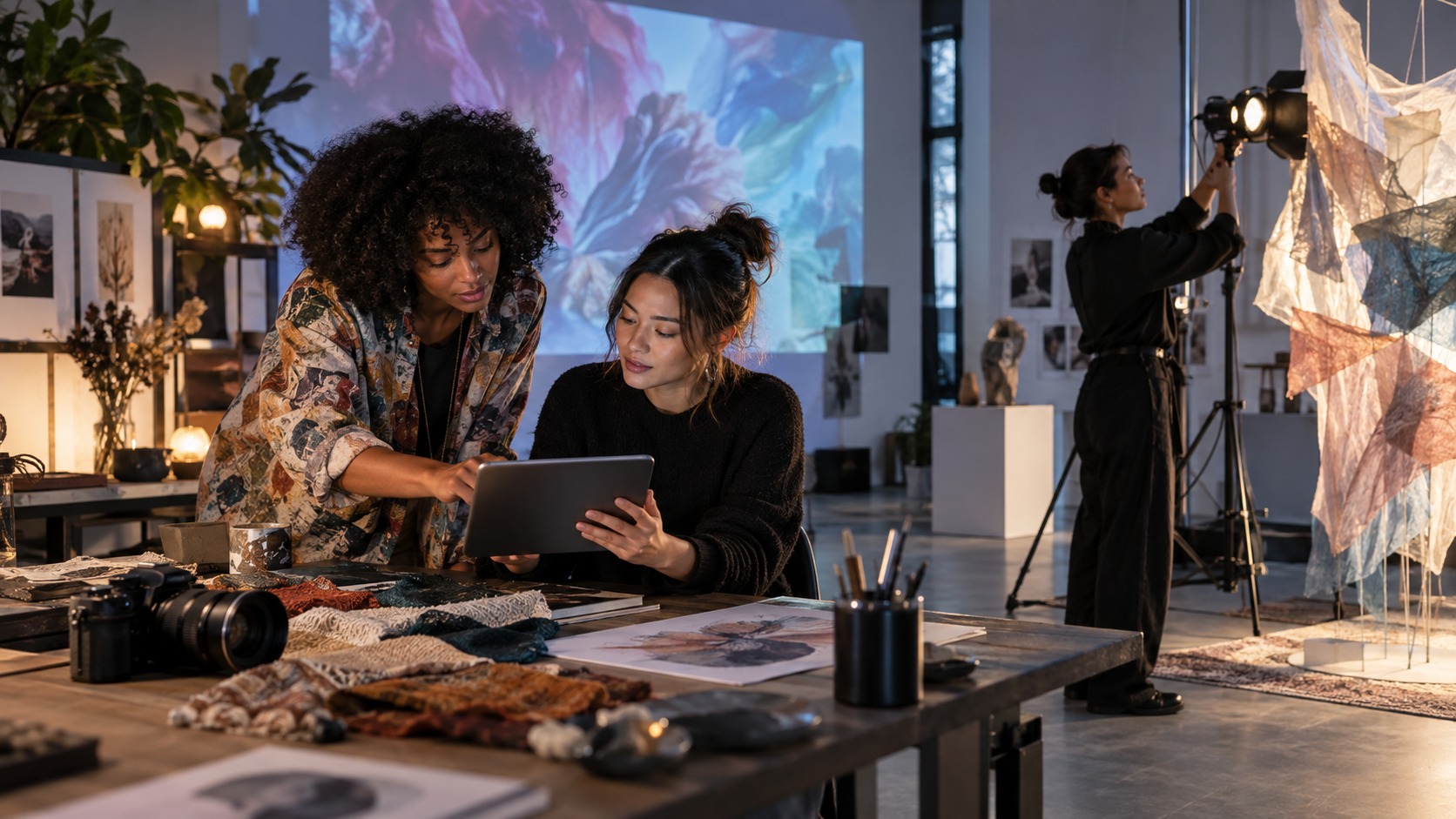
Digital art is sometimes described as if technology itself were the main event. Many women creators are complicating that idea. They use digital tools to explore intimacy, identity, memory, access, and power rather than treating software as a spectacle machine. A projection, animation, augmented installation, or social platform can become a way to ask who is seen, who is watched, who is copied, and who controls an image once it circulates.
This approach is especially important because the digital age can flatten people into content. Women artists often resist that flattening by slowing the viewer down. They combine physical materials with digital layers, use screens alongside hand-built environments, or create participatory projects where the audience must think about consent, attention, and presence.
The best digital work does not feel less human. It can feel more aware of how human life now moves through devices, archives, algorithms, cameras, and feeds. Women artists are helping culture ask better questions about technology: not only what can be made, but what kind of relationship the making encourages.
Creative Leadership Is Moving Beyond the Lone Genius Model
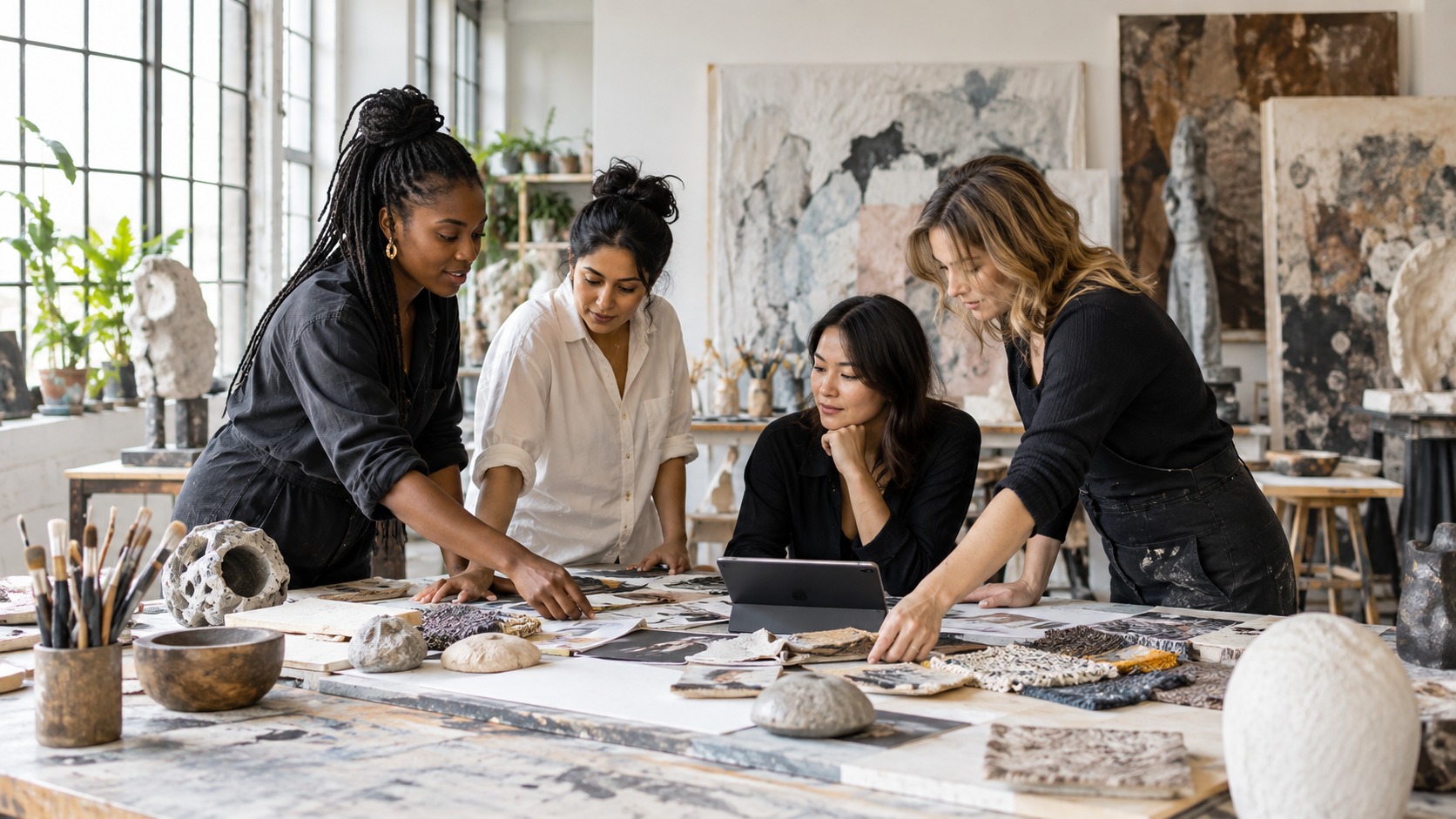
The old myth of the solitary genius still appears in art culture, but it fits the present badly. Many of the most interesting women-led creative projects are collaborative, networked, and community-rooted. They involve shared studios, collective exhibitions, neighborhood workshops, mutual aid, public education, and mentorship. This does not reduce artistic ambition. It changes the shape of ambition.
Collaboration allows artists to build structures around their work rather than waiting for permission from existing systems. A group of artists can create a pop-up show, publish a zine, organize a screening, host a critique circle, or build an online archive. These actions may look small compared with a major museum exhibition, but they can shift culture by changing who has access to conversation and confidence.
This leadership style also makes room for sustainability. Instead of treating visibility as a scarce prize, many women artists are asking how creative ecosystems can endure. Who gets paid? Who gets childcare? Who gets credited? Who gets protected when the work becomes controversial? The future of contemporary culture depends on those practical questions as much as it depends on aesthetics.
Representation Is Becoming More Specific
Representation in art is not only about being included. It is about being represented with enough specificity to feel real. Women artists are changing culture by moving beyond symbolic presence toward complex interiority. Their subjects are not only “strong women,” “mothers,” “muses,” or “survivors.” They are contradictory, funny, tired, ambitious, spiritual, sensual, private, public, and unfinished.
This specificity matters because shallow representation can become another form of control. When women are shown only as icons, victims, or ideals, viewers are not asked to meet their full humanity. Contemporary women artists often reject that simplification by showing bodies, homes, friendships, landscapes, and memories with friction still intact.
Specific representation also changes criticism. A reviewer has to move beyond applause for inclusion and ask better questions about form, reference, technique, and risk. That is healthier for everyone. Women artists deserve serious engagement with what the work is doing, not only gratitude that the work exists.
Public Space Is Becoming a Canvas for Shared Memory
Women artists are also changing culture outside galleries. Murals, monuments, installations, performances, and temporary public projects can alter how a community understands its own streets. Public art has the power to make memory visible where people shop, commute, gather, protest, and rest. When women lead that work, the public record can widen.
The stakes are high because public space often reveals whose stories a culture considers permanent. A sculpture in a plaza, a mural on a neighborhood wall, or a community altar after a loss can all become a form of shared authorship. These works may honor local women, address violence, celebrate cultural survival, or create beauty in places that have been neglected.
Public art also changes the audience. People who may never enter a museum can still encounter a serious artwork on their daily route. That encounter can be brief, but it can plant a question. Why is this story here? Who made it? What has been missing from this place? Women artists are using public space to make culture less sealed off and more accountable to lived communities.
This is one reason public projects can become cultural turning points. They make art part of routine movement, not a special occasion. A passerby may first notice color, then a face, then a story, then a name she wants to search later. That sequence can be modest, but it is how public imagination often changes.
The Art Market Is Slowly Learning Different Values
The art market still carries deep inequalities, but pressure is building. Collectors, curators, critics, and institutions are being asked to reconsider whose work they undervalued and why. Women artists are not waiting passively for correction. Many are building direct relationships with audiences, selling through independent channels, forming collectives, and using digital platforms to share process and context.
Money matters because it shapes who can keep making work. A culture that praises women artists but does not buy, fund, review, preserve, or commission their work is offering admiration without infrastructure. Real change requires more than visibility. It requires budgets, contracts, studio access, conservation, insurance, childcare, and long-term collection practices.
As these values shift, the future of contemporary culture becomes less dependent on a narrow gatekeeping class. That does not mean expertise disappears. It means expertise has to become more curious, more historically aware, and more responsible about the exclusions it inherited.
There is also a generational effect. When younger artists see women receiving serious support across many media and life stages, they inherit a wider sense of what a creative career can look like. They do not have to imagine success only as youth, novelty, or market heat. They can imagine research, teaching, community work, public commissions, and long practices that change slowly over time.
Why This Future Feels Different
The future women artists are shaping feels different because it is not only about adding more names to an old list. It is about changing the list’s assumptions. What counts as innovation? What counts as knowledge? What counts as beauty? What counts as cultural leadership? These questions reach far beyond the art world.
For readers, the invitation is simple but demanding: look longer, ask better questions, and support the spaces where women’s creative work can grow with seriousness and freedom. Contemporary culture is not made only by the loudest trends. It is made by the artists who teach people how to see what was already there, waiting for a more truthful frame.
The change is also emotional. Women artists are making room for tenderness without weakness, anger without simplification, beauty without obedience, and experimentation without coldness. That range gives contemporary culture more ways to tell the truth. It helps audiences recognize that the future is not only built by new tools or new markets, but by new permissions to feel, remember, question, and make.
When that permission spreads, culture becomes less narrow. A young viewer may recognize her grandmother’s hands in a textile installation, her own digital life in a projection, or her neighborhood in a public mural. Those moments do not solve every structural problem, but they can change what a person believes is worth making. That belief is one of the quiet engines of the future.
The most useful response is not to treat women artists as a trend. Trends pass, and the work being done here is larger than a season of attention. It is a reorganization of value: who is studied, who is paid, who is remembered, who is allowed to experiment, and who is trusted to describe the world. That is why the future of contemporary culture cannot be separated from the futures women artists are already making.
That future also asks viewers to become better participants in culture. Looking, buying, sharing, teaching, preserving, and questioning are all forms of participation. When those actions are done with care, they help women artists move from visibility into lasting influence.
Lasting influence is the real measure. A culture has changed when women’s work is no longer treated as a special feature, but as part of the foundation people expect to study, collect, debate, and remember.