Creative Movements Are Growing Through Shared Leadership
The Rise of Female-Led Creative Movements Around the World is for readers who want to understand why so much cultural energy now feels collaborative, local, and globally connected at the same time. Across art, design, performance, publishing, craft, film, and community practice, women are building movements that do more than showcase individual talent. They create spaces where stories, skills, resources, and audiences can move together.
A Movement Is More Than a Moment
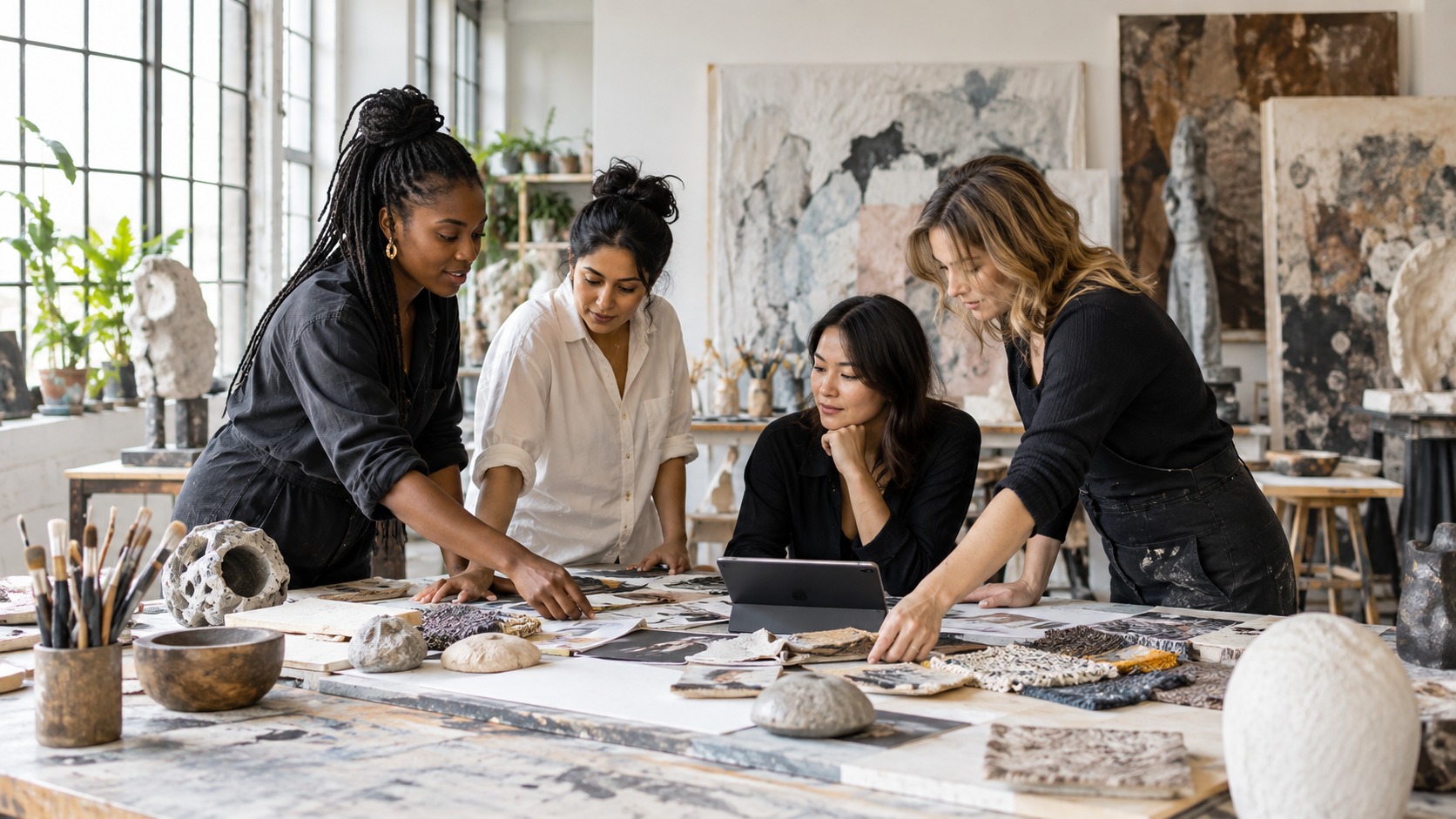
Female-led creative movements are often misunderstood because they may begin with something that looks temporary: a pop-up exhibition, a workshop, a reading series, a neighborhood mural, a small festival, or a digital gathering. The event matters, but the movement is what remains afterward. It is the network, language, confidence, and shared memory that continue to grow after the chairs are stacked and the photos are posted.
This distinction is important because women’s creative labor is often celebrated in bursts and then left unsupported. A movement turns attention into structure. It creates return points where artists can meet again, audiences can deepen their understanding, and younger creators can find a path into the work. Instead of one night of visibility, the goal becomes an ecosystem.
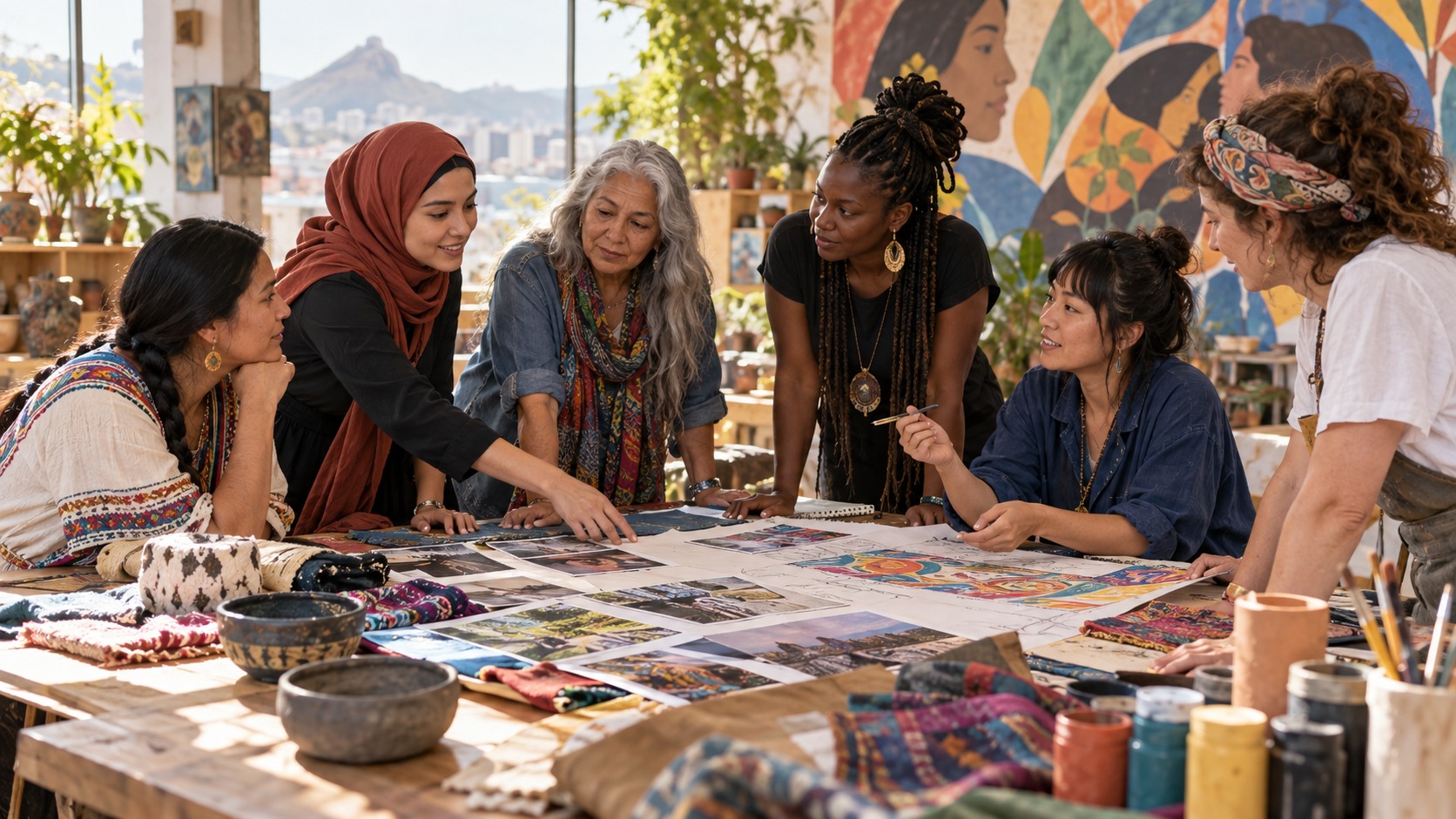
Around the world, women are building these ecosystems with different materials and traditions. Some movements form around textile arts, film, public performance, Indigenous knowledge, digital storytelling, or independent publishing. Others gather around a city, language, diaspora, or social need. What connects them is not sameness. It is the choice to build culture through shared leadership.
Shared Leadership Changes the Energy
The rise of female-led creative movements is also a shift away from the idea that culture changes only through singular stars. Individual brilliance still matters, but movements ask a different question: what could many artists build if the room itself were designed differently? That question changes the energy from competition to circulation.
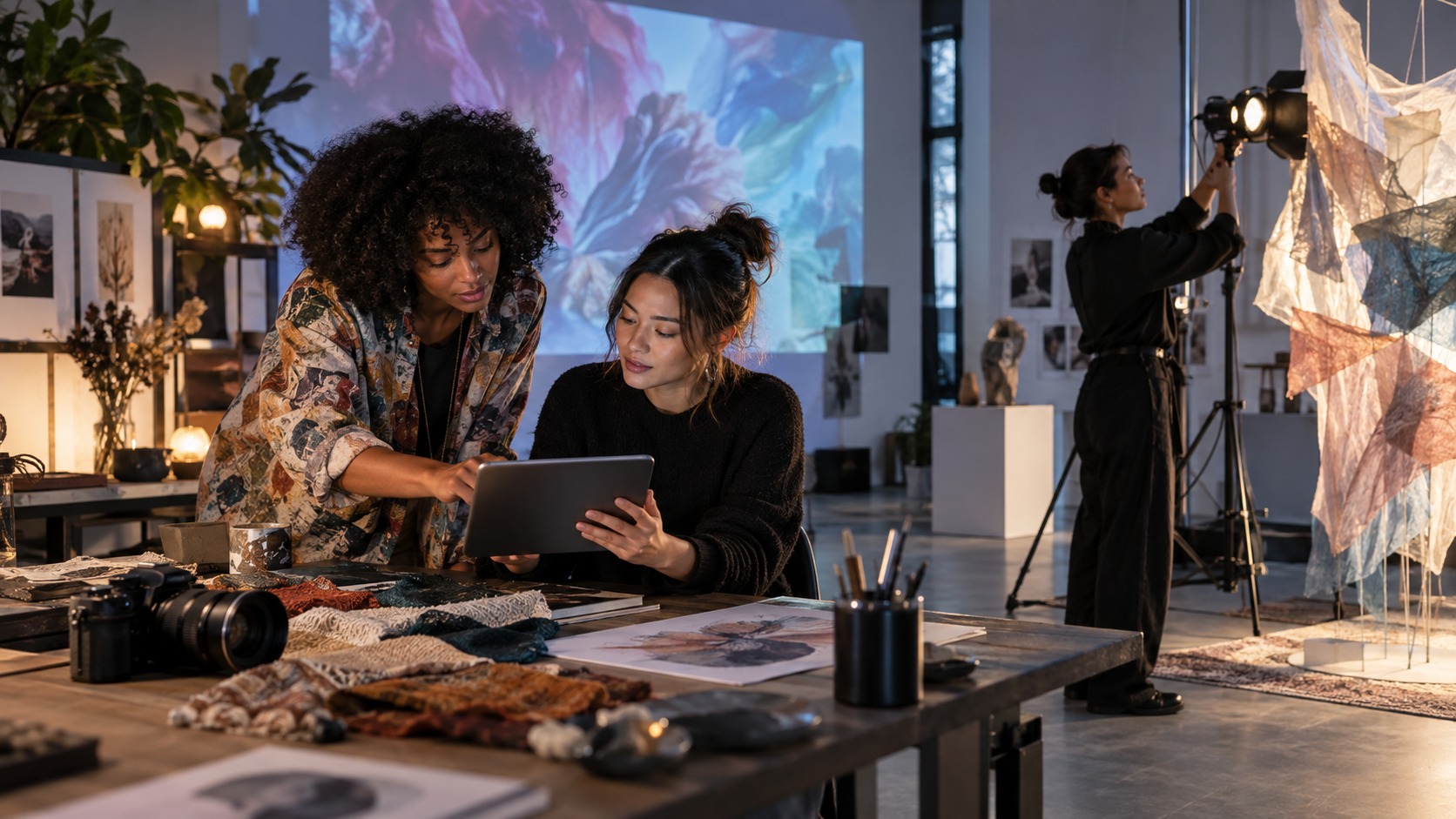
Shared leadership can show up in practical ways. One person may organize the space, another may handle archives, another may mentor younger members, another may bring technical skill, and another may hold community relationships. When those roles are respected, the movement becomes less fragile. It does not depend on one exhausted founder to carry every visible and invisible task.
This model is especially meaningful for women because creative systems have often asked them to prove exceptional worth before offering basic support. Female-led movements can reject that scarcity. They can say that many people deserve tools, stages, walls, microphones, and time. That generosity can become culturally radical.
Local Roots Give Global Work Its Strength
Many female-led movements become globally resonant because they are deeply local first. A project grounded in a specific neighborhood, craft tradition, language, or history can travel precisely because it feels lived rather than manufactured. People elsewhere recognize the honesty even when the details are not their own.
The digital age helps these connections form. Artists can share process across continents, compare barriers, invite collaboration, and document work for wider audiences. Yet the strongest global movements resist becoming generic. They protect the texture of place. They know that a weaving circle in one region, a women’s film collective in another, and a public art workshop somewhere else may share values without needing to look alike.
This balance between local and global is one reason these movements feel timely. People are hungry for connection, but they are also wary of culture being flattened into trends. Female-led creative movements can offer another model: rooted work that travels through respect, translation, and relationship.
Creative Movements Preserve Knowledge
Movements do not only produce new work. They preserve knowledge that might otherwise disappear. A women-led craft collective may protect dye methods, symbols, songs, and stories passed through families. A digital archive may save photographs, interviews, and exhibition records from artists who were never collected by major institutions. A community theater group may hold local histories that official records ignored.
Preservation is creative, not passive. Deciding what to save, how to name it, who can access it, and how it should be shared are artistic and ethical choices. Women often lead this work because they have long been keepers of informal memory: family albums, recipes, textiles, oral histories, rituals, and neighborhood stories.
When those forms enter public creative practice, culture gains a richer archive. Future artists do not have to begin from silence. They can inherit evidence that women were thinking, making, organizing, and experimenting all along.
Public Culture Becomes More Participatory
Female-led creative movements often invite participation without lowering artistic seriousness. A community mural can involve residents and still have a strong visual concept. A workshop can welcome beginners while honoring advanced skill. A public performance can be accessible and layered. This combination matters because culture should not feel like a locked room.
Participation changes the audience’s relationship to art. People who help gather stories, prepare materials, attend rehearsals, or contribute memories are less likely to see art as something distant. They understand labor. They feel ownership. They become part of the cultural conversation rather than passive consumers of it.
This participatory quality is especially powerful in communities that have been represented by outsiders more often than they have been given tools to represent themselves. A female-led movement can create conditions where people speak nearby, with, and through the work rather than being mined for material. The difference is ethical as well as artistic. It changes who has agency inside the creative process.
Participation also builds future audiences. A teenager who helps prepare a festival, records an elder’s story, or paints one section of a public wall may begin to see herself as someone who belongs in culture. That sense of belonging cannot be manufactured by advertising. It is built through experience, invitation, and trust.
Economic Survival Shapes Cultural Possibility
No creative movement survives on inspiration alone. Money, space, equipment, childcare, transport, documentation, and administrative labor all matter. Female-led movements often become skilled at stretching resources, but resourcefulness should not be mistaken for adequate support. A movement that changes culture still needs rent paid, artists paid, and organizers protected from burnout.
This is where audiences, funders, and institutions have responsibility. Supporting a movement means more than praising its mission. It means buying tickets, commissioning work, paying speakers, funding archives, covering access needs, and respecting timelines. It also means trusting women leaders with budgets, not only asking them to provide emotional labor or community credibility.
The future of these movements depends on whether support becomes structural. Temporary enthusiasm can launch a project, but durable funding helps it mature. The strongest movements are building their own economic models while also demanding fairer treatment from the systems around them.
Economic survival also affects creative risk. When organizers are worried about rent, unpaid invoices, or losing access to space, they have less room to experiment. Reliable support can make a movement braver because people are not spending every ounce of energy on emergency maintenance. That bravery is where new forms, new collaborations, and new public conversations often begin.
Conflict Can Be a Sign of Real Growth
Movements that matter will face disagreement. People will argue about priorities, representation, money, credit, aesthetics, politics, and pace. This does not mean the movement has failed. It means real people are trying to build something with consequences. The question is whether the group has enough trust and structure to move through conflict without erasing harm or punishing honesty.
Female-led movements sometimes carry an unfair expectation to be endlessly nurturing and harmonious. That expectation can silence necessary critique. Strong leadership makes room for care and accountability together. It understands that repair is a skill, boundaries are healthy, and disagreement can clarify the movement’s purpose.
When handled well, conflict can deepen the work. It can reveal who has been left out, which labor is invisible, and what values need to become policy rather than aspiration. Movements grow when they are brave enough to examine themselves.
Why These Movements Matter Now
The rise of female-led creative movements matters because culture is not only shaped by finished artworks. It is shaped by the conditions that allow artworks to exist. When women build studios, networks, festivals, archives, workshops, and public programs, they are changing those conditions. They are making it easier for more people to imagine themselves as cultural participants.
These movements also offer an answer to isolation. In a world where creative work can be fragmented by platforms, markets, and unstable institutions, shared practice becomes a form of resilience. It reminds artists that they do not have to carry every question alone.
For readers, the invitation is to look for the structures behind the visible event. Who organized it? Who taught? Who cooked, translated, installed, archived, welcomed, and followed up? Female-led creative movements are rising around the world because women are not only making art. They are making the rooms, records, relationships, and futures that art needs.
That work deserves to be named as cultural leadership. It may not always resemble the old image of leadership attached to a podium, a title, or a single signature. Sometimes it looks like making the call sheet, unlocking the studio, translating the grant, introducing two artists who should know each other, or saving the program before it is thrown away. Movements rise because those acts accumulate.
The rise of female-led creative movements is ultimately a story about imagination becoming infrastructure. Women are not only imagining more inclusive culture. They are building the practical pathways that let it happen repeatedly, in many places, with many voices.
These pathways can begin modestly. A reading circle becomes a press. A workshop becomes a residency. A shared studio becomes a neighborhood arts hub. A group chat becomes a festival committee. Movements often look small before their impact becomes visible, which is why early support matters so much.
The global rise of these movements also reminds audiences to resist a single center of culture. Creative authority does not belong only to famous cities, elite schools, or heavily funded institutions. It can emerge from rural studios, apartment living rooms, community centers, digital gatherings, and temporary spaces built with borrowed chairs and serious purpose.
When women lead those spaces, they often bring a practical awareness of care into the structure. They ask who can attend, who is watching children, who needs translation, who has transport, and who feels safe speaking. Those questions may sound logistical, but they shape the art that becomes possible. Culture changes when access is designed into the room from the beginning.
For readers, noticing female-led creative movements means looking beyond finished objects toward the relationships that made them possible. The artist on the poster matters, and so does the organizer who made the room workable. That wider view helps audiences understand culture as a living system rather than a series of isolated performances.
It also helps funders and institutions see what support should actually cover. A movement needs documentation, hospitality, access, coordination, and rest as much as it needs a stage. When those needs are respected, creative energy can become durable cultural change.
That durability is where a movement becomes part of history, not just a moment of attention.